


IMF Communications:
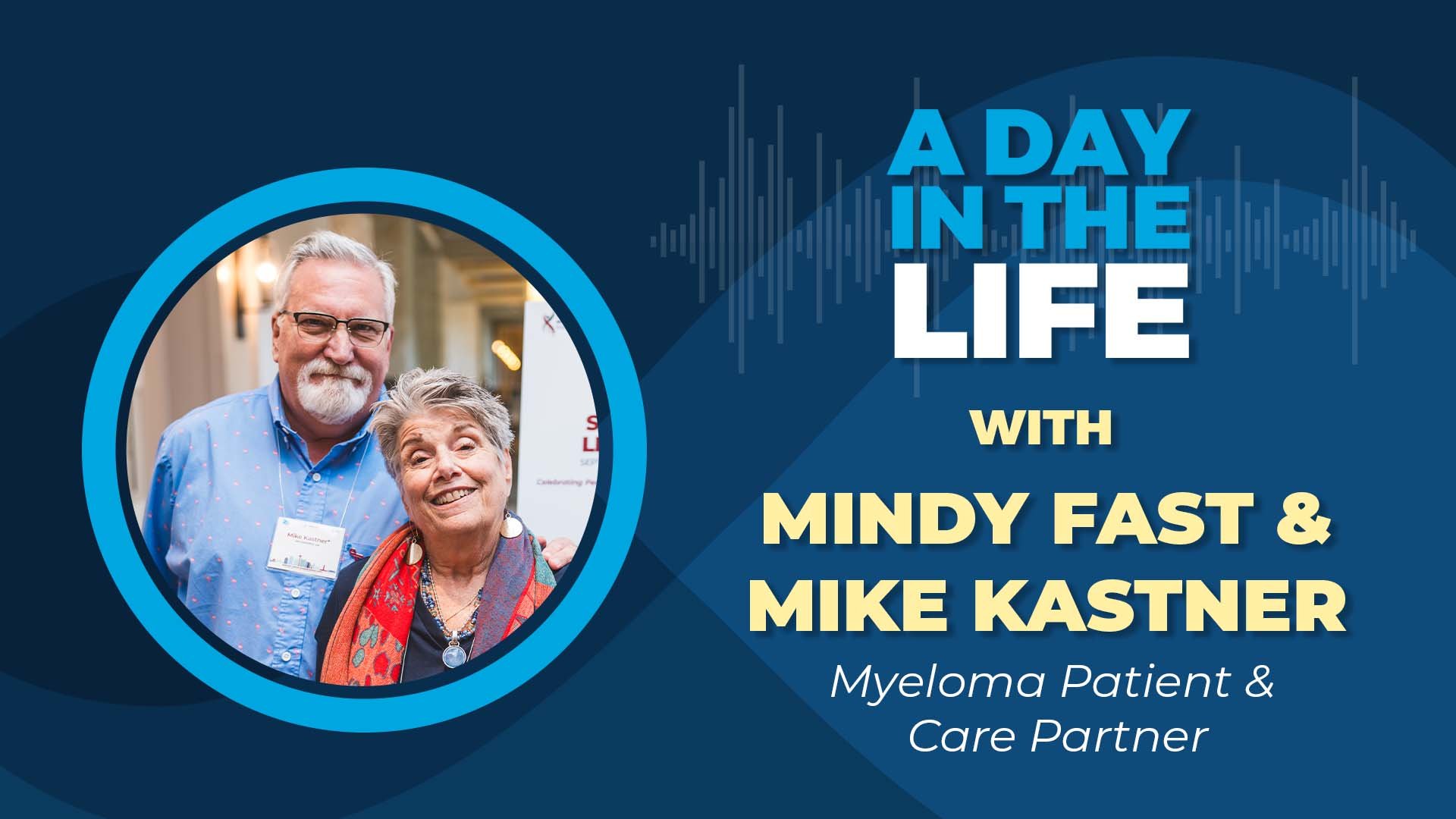
Hello everyone, you're listening to A Day in the Life Podcast, brought to you by the International Myeloma Foundation. We hope this podcast brings messages of hope and resilience to people in the myeloma community and beyond. Today, I am talking with Mindy Fast and Mike Kastner, a married couple living in Richmond, Virginia. I want to thank you both for taking time out of your busy schedules to talk with me today. To start off, I wanted to ask, what was it like before, Mindy, you were diagnosed with multiple myeloma, had either of you heard of the disease before?
Mindy Fast:
Okay. We had not heard of the disease before, nor was there any reason why it was even on our minds. We were both working full time, we had two daughters, at the time, one was in college and one was in high school, that's pretty much it. That's what life was like. Busy.
IMF Communications:
Busy, busy life. So, it really took you by storm, especially for your kids. How was it to share this news with them?
Mindy Fast:
It was tough, it was tough, because we had one already in college, and she was home when I was diagnosed, she was home for a break, and she had to go back to college. So, we kind of had to sit down as a family and talk about it, what it meant, and it was tough because we didn't know what it meant either. So, we had to share that with them. My other daughter was in high school, so she was here, and watched me at least through the first year. She was a senior in high school. So, it was difficult sharing that news with them. They were old enough to know.
IMF Communications:
To understand what everything-
Mindy Fast:
Understand.
IMF Communications:
And Mike, how did you handle the diagnosis?
Mike Kastner:
Yeah, it was quite a shock to all of us, when the doctor at the Dock in the Box, that found her myeloma early, which we will probably talk about later, when he mentioned that that was a possibility before it was confirmed, I went on the internet and did some searching to see what the heck this was all about, and that helped a little bit to figure it out. But 17 years ago, there was a whole lot less treatments than there are now, so it was quite a bit more shocking, I think, than it would be to somebody who was diagnosed in the last year or two, probably.
Mindy Fast:
Exactly.
Mike Kastner:
It was tough, but as a family, we got through it very well.
IMF Communications:
How did the diagnosis happen for you? You mentioned... What were the signs like, sometimes people have minor issues like back pain, and they don't suspect that it's multiple myeloma at all, or haven't even heard of the disease? What were the first signs for you, Mindy?
Mindy Fast:
Well, actually, we hadn't looked into it at this point. I thought I had the flu, and my temperature went up. And I was going to wait it out, like you do with the flu. My temperature went up to about 103, and it was on a Saturday, and Mike said that's a little high for us to be waiting it out. So, we did go to a Doc in the Box, they did just some blood work, not that much, found out that it was a kidney infection, and not related to myeloma, that was nothing, nothing to do with it. The doctor gave me antibiotics, he had me come back the next day, and the next day and he said, "I really don't like how you're not reacting to the antibiotics," and he did more blood work. We were grateful, sort of, that he said, after two or three days of doing blood work, he said, "I recommend that you go see a hematologist," that was okay, "oncologist." That was very disturbing.
So, it really was this wonderful Doc in the Box, who took it upon himself to do a little bit more testing to see what was going on. So, I went to the hematologist oncologist and through maybe one visit with him, one or two, he suspected myeloma, he did a bone marrow biopsy, that was the last test he wanted to do, and-
Mike Kastner:
It was on a Friday afternoon.
Mindy Fast:
Yeah, it was a Friday afternoon. And he said, "I'm not going to make you wait for this, wait through the weekend."
IMF Communications:
Wow.
Mindy Fast:
So... Oh, he is a wonderful guy. So, he said, "Go to lunch and come back."
IMF Communications:
Oh wow.
Mindy Fast:
So, that gave him time to look at whatever he looks at in the biopsy, and confirm that it was multiple myeloma. So, that's how we found out.
IMF Communications:
And could you tell me a little bit about your treatment journey's been like up until the time until you got to CAR T-cell therapy? I'm sure it's been arduous, it seems like, from the laughter there. If you can sort of summarize that until you got to the point of CAR T.
Mike Kastner:
Can she just check off all of the above?
IMF Communications:
If she'd like, sure.
Mindy Fast:
Yeah, yeah, yeah. I was going to say, if you can name it, I probably had it. Okay. So, I started off with Thalidomide, that not many of my colleagues have had. It wasn't much treatment. I quickly moved to Revlimid (lenalidomide) and Velcade... And I'm not going to go step-by-step.
IMF Communications:
No problem.
Mindy Fast:
But 2008, in May, I had a stem cell transplant, an auto, couldn't get my numbers down as low as they wanted them to be, but my doc said, let's just go ahead, because at that point, there was no other treatment to give me to try to get the numbers down. That didn't work so well, and we knew that my brother was an exact match. So, what? Three or four months later, I did an allogeneic transplant with my brother's stem cells. And it was well worth it, because that bought me about six years of no treatment. Because back then they were not doing any kind of maintenance. And then, 2015 it came back, and that's when I can say, you name it, I had it. I had... Let's see. I even had Doxil, I had Velcade, Revlimid, Pomalyst, carfilzomib, venetoclax, selinexor, and of course, dexamethasone, I had radiation to my hip, to my upper arm, and to the back of my skull, where they found a lesion that didn't look so good, as they were doing pre-testing for CAR T, so I was grateful for that. Yeah, so that's the summary of it.
IMF Communications:
That's a lot of different treatments. So, when you were offered CAR T, how did the options seem to you? Were there any alternatives presented at that time? Sounds like you had gone through so many different therapies that CAR T seemed like a good option at the time, or what was it presented to you?
Mindy Fast:
No, I was offered... I've got to the point where, now what do we do? And it was CAR T, and I was offered bispecifics. And thanks to my doctor, my oncologist here in Richmond, who is an expert, and my specialist, Dr. Vesole, who had recommended CAR T months ago, but I didn't think I was ready for it. In doing our own research, we just figured out with the one and done with CAR T, that's the way we wanted to go. It seemed like they were similar in that they both required hospitalization, they both had similar side effects, and treatment for the side effects. So, I bought into the one and done.
IMF Communications:
And Mike, how did you feel about Mindy's decision to take on CAR T-cell therapy at the time?
Mike Kastner:
Yeah, it was just like, I guess after going through two stem cell transplants, the CAR T didn't seem quite so foreboding, especially since it had been tried and trued for a little while, we weren't in the clinical trial phase of it. But I agree with her, we wouldn't want to, the bispecifics would've meant you'd stay on it for indefinite period, or if we can get this similar response with a CAR T, and that would last without treatment for a while, then we thought it was worth it and went for that.
IMF Communications:
And what was the process like? I think Mindy, you started saying that there was hospitalization involved, was it a CAR T center, or was it at your own myeloma center? If you could just share a little bit about that.
Mindy Fast:
Sure, sure. Yeah, we're very fortunate here in Richmond, we have Massey Comprehensive Cancer Center, which is part of Virginia Commonwealth University Health System, and they were doing CAR T-cell therapy, and actually had a couple myeloma patients. So, I was glad that that was under their belt. So, the process was first you had to get a lot of tests, just make sure that your body was ready to accept this treatment, and that included a cardiac workup, a pulmonary function test... What else? A PET scan, biopsy, bone marrow biopsy, and there were probably some other ones in there. A lot of blood work to check on things. After that was done, then I did what's called leukapheresis, which is similar to apheresis, but it's when they take your T-cells, your killer cells. So, I did that, that was outpatient. It was in the hospital because I go to the hospital, but...
Mike Kastner:
She had a minor hiccup with that, where the machine kind of failed, and they had a few issues, but turns out that they had enough cells, that was our biggest concern, that they didn't get enough cells to do the CAR T-cell therapy workup. But it turned out that they did, so it was good.
Mindy Fast:
Yeah, yeah, they kept pushing it, they said, oh, 3:00 your transportation leaves for the cells, and I'm... Yeah, that was a tough day for me, I have to say that was one of the toughest days in all of my treatments that I've ever had. That just kind of-
IMF Communications:
But I think your insight will be helpful to other patients who are preparing to maybe do this with them. So, thank you for sharing.
Mindy Fast:
Yeah, yeah.
Mike Kastner:
There's a good chance that wouldn't happen to anybody else, that was a freak thing where the machine broke down and right near the end of where they were getting all the cells, but it worked out.
Mindy Fast:
Yeah. So, I guess the one takeaway from that would be, most of the time things are going to go as planned, but there's hiccups every once in a while, and you got to be ready for them if you can. And have your support system because actually, Mike was a dear, he called on my patient manager, because I wasn't there, and all of a sudden she walked in the room. So, that was a wonderful thing. So, he was prepared, I guess.
Mike Kastner:
Yeah, because I couldn't be in the room with her when she had the leukapheresis, but she did mention that she was having some issues, so I called down the hospital and somebody came right up, and it helped out a lot.
IMF Communications:
And Mike, what would be some insight that you could give to a care partner of somebody who's undergoing CAR T-cell therapy? What sort of things did they need to be prepared for? And also, did you have help? You mentioned the patient manager, was there help as far as home care? It sounds like your children were grown at the time, any sort of pet care or any sort of resources that you had to call upon to get through this time?
Mike Kastner:
Yeah, everything was working out pretty well, except while she was in the hospital with CAR T-cell therapy, I decided to get COVID-19 for the first time.
IMF Communications:
Awww.
Mindy Fast:
The first time, what?
Mike Kastner:
Two years after the pandemic started. Three years after actually. So,, that kind of put a hiccup in things where then I had to isolate at home, and she didn't want to stay in the hospital any longer than she had to. So, luckily she was able to go to a friend's house, and my daughters and the friend helped clean that house out, and change the sheets, and be all ready to help with infection, not have infections and stuff then. Thea A couple more days went by, I was cleared from the COVID-19, then she was able to come home. So, we then cleaned, made sure our house was all clean and ready to go for her to come home for that.
Mindy Fast:
I'm going to add just something. My daughter said, when I stayed at my friend's house, and then I was preparing to come home, and my daughter said, "Please make sure you're coming home, I do not want to clean one more house." So, yeah.
IMF Communications:
They came together as a team then, I guess.
Mindy Fast:
Oh, yeah. Absolutely. Yeah. Were you going to say something?
Mike Kastner:
I don't remember.
IMF Communications:
And Mike, what kind of advice do you have to other care partners, be it with anything that you can give as insight to the caregiving journey through all the different types of treatments Mindy's gone through? And also about the phrase care partner, how do you feel about that language being used to describe your role?
Mike Kastner:
Yeah, because up until now, I guess it's mostly been caregiver. Mindy co-runs a support group, and back in the day, a lot of people would say caretaker, and we would say, well, you're not a caretaker, you're a caregiver. But I think care partner really kind of sums all that up in a very nice package. So, yeah, I like that term, care partner. The big thing is just read up and take all the advice you can. A lot of times... Like the IMF has all kinds of things, pamphlets and literature to read about what to expect, and just be ready. Quite often the things that are possible won't happen, but just in case they do, it's nice not to be surprised and say, oh, no one told me that blank, blank, blank would happen.
So, I think the big thing is to be patient, try to be educated, stay involved, go to all the doctor's meetings you can ahead of time so you hear what she hears, and she hears what I hear, so we can be on the same page with everything. But again, after having two stem cell transplants, we kind of felt CAR T-cell therapy was not really a walk in the park, but it wasn't quite as foreboding, and it didn't seem to be as scary as the, especially the allogeneic transplant was.
IMF Communications:
Were there any side effects or complications you experienced, Mindy, after the CAR T?
Mindy Fast:
No. I did have a little cytokine release syndrome in the hospital, my temperature went up a little bit, my blood pressure dropped, but they have this miracle drug, and I love to say it, tocilizumab, that they give you, and man, it works like a charm.
Mike Kastner:
And that was even on the paperwork we got before we went in for the CAR T, and if this happens, we might get that, and so forth, so it was really nice to know that ahead of time. The Massey Center still does CAR T-cell therapy inpatient, quite a few other, I think most other places are doing it outpatient, which still kind of surprises me, I guess after a day or so you go out the door. When she had it, they told her she couldn't drive for 60 days, now they say you can drive after, what?
Mindy Fast:
Two weeks.
Mike Kastner:
Two weeks. And then the same thing, people that are outpatient go right home a couple of days after this CAR T-cell therapy, which I guess it's working out or they wouldn't keep doing it. But right now, our center is still doing it inpatient. But there weren't a whole lot of surprises, again, because even Massey had given us some nice handouts of what to expect, this could happen with the cytokine release syndrome, which is the big if with CAR T-cell therapy, and they were right on top of it, and took care of it.
IMF Communications:
That's good news. And I'm going to shift gears a little bit, talking a little bit about self-care, this is both for yourself as a patient, Mindy, and also for you Mike, as a care partner. What reminders would you give to people who are experiencing the journey of living with myeloma and how to best take care of themselves during this time?
Mindy Fast:
You want to go?
Mike Kastner:
Well, on the care partner part, everything's always focused on the patient, but I think it's so important that the care partner is also taking care of him or herself, because you have to be... Well, as long as you don't get COVID-19, you have to be as healthy and rested and ready to go for anything that could come up, and be able to help your partner out. If you run yourself ragged to the bone, then you're not going to be much help to the patient. So, I think my biggest things to bring about that would be self-care for the care partner so you're ready to help out with the patient.
Mindy Fast:
I think too it's important to form, if you're able to, a support team. Whether it's your church, or your neighbors, or friends, just know that there's other people there to help out-
Mike Kastner:
Yeah, even if you have a care partner in the home, it's nice to have other people.
IMF Communications:
Extended care partners.
Mike Kastner:
Extended care partners.
IMF Communications:
Yes, extended family of care partners.
Mike Kastner:
Very good. Right.
Mindy Fast:
Yes. So, for an example, when I was home afterwards, and Mike would go out to run errands or something, we would just call a neighbor and say, hey, just want you to know, Mike's out, I'm home by myself, in case I need anything, I might have to give you a call. Never happened, but it was good to have that backup.
IMF Communications:
Right, right. And what suggestions would you give to patients and families who are having trouble advocating for themselves, maybe asking about clinical trials, asking about CAR T, what kind of advice would you give them to be better self advocates?
Mike Kastner:
Well, let me jump right in first, is it's like I said, she co-leads a support group, if you can find a support group, a lot of times, even if you don't have one locally, with Zoom now, you can join a support group virtually. And just to be able to, again, have that community to be able to rely on is such a good thing to have. And if you have a support group, then you can go... Because we've talked about that many times at all of our meetings, stem cells, CAR T, different therapies, how people react to them, and it's so good to be able to tell what you know, and also hear back from other people what they've gone through. So, I think that's one of the more important parts.
Mindy Fast:
Yeah. And I just can't encourage people more to ask questions. I guess because I do, and I don't hesitate, I can't... Why? Ask questions. I recommend that patients write down their questions, not just think of them in your head. Have them written down, bring a piece of paper with you, bring somebody else with you to your appointment, even if it's someone that has no idea what's going on, at least they can write down some things that you might miss.
Mike Kastner:
Yeah, and if you don't have someone with you, you could ask, is this okay if we record this conversation? Pull your mobile phone out, like an iPhone, turn on voice memos, and let it record the conversation because you can listen to it later and say, oh, I forgot they told me that I could do blank, blank, blank. So, that helps quite a bit too.
Mindy Fast:
And the IMF has this wonderful tip sheet, it's pretty new, I think, it's called, Ask Your Doctor. And it has a list of questions, questions that relate to, basically, what is myeloma? What is my treatment about? What are the fiscal considerations? And what kinds of support do I have? I think that's a great way for someone maybe that can't think of the questions, to start thinking of some questions, and maybe even bring that tip sheet, I'd recommend just bring the tip sheet with you.
IMF Communications:
Right. Because when you're in the room, things leave your head, so it's nice to have something handy.
Mindy Fast:
Yes. Yes. Yes. And I also would recommend, and yes, this is a plug for the IMF, I would recommend relying on the info line, and also the new AI, Myelo. I think Myelo is a wonderful being, I'm not sure if it's a guy or a girl, but it's a being. It's wonderful.
IMF Communications:
Yes, we're very happy with Myelo as well. Speaking of, you just mentioned the IMF, how did you get in contact with the International Myeloma Foundation, and how do you connect with us today?
Mindy Fast:
How did I do that? At first, I can't remember. I think a friend of mine who I had met, I met her at the clinic, which was funny, but she went to a family... What do you call it?
IMF Communications:
Patient Family Seminar.
Mindy Fast:
Patient Family Seminar. Yes. And learned about the IMF and the support groups, and she came back all excited, and she said, "I think we should do a support group in Richmond." So, we've been doing it now, I don't know, 15 years or something. So, that's how I have been involved with the IMF. It's a wonderful support system to have, great people, expert people in myeloma.
Mike Kastner:
Yeah, myeloma.org is all you have to tell people. Where you can get all your wonderful support.
IMF Communications:
We appreciate the plug.
Mike Kastner:
Oh, yeah.
Mindy Fast:
Yeah, yeah, yeah. Yeah, I don't know what I would do without it. There are other groups too, but... HealthTree is a good group. But I think it's important, Mike was saying, doing research, it's important that whatever research you do, it's with a reputable organization. And if you don't know if it's reputable, talk to your doctor, they may know.
IMF Communications:
And I'm just about getting ready to wrap up, but is there anything I haven't asked you today that you would like to share with the myeloma community?
Mindy Fast:
Yes, I would like to share what life is like after CAR T for me.
IMF Communications:
Yes, excellent.
Mindy Fast:
Everybody's different, but for me, it's been a wonderful freeing experience. We have been able to travel, we have a granddaughter, I've been able to keep up with my granddaughter, and basically, I can do whatever I want now because I don't have to do things around appointments, or doctor's visits, or infusions, or things like that. So, life after CAR T, at least now where myeloma is still quiet, is pretty good, wouldn't you say?
Mike Kastner:
Yes. Yes, still just mask up when you're in crowds, because your immune system is reduced, but other than that, it's been nice for her to get back to regular daily life things.
Mindy Fast:
And can I say one other thing?
IMF Communications:
Oh, definitely.
Mindy Fast:
Yeah, yeah, yeah, yeah. I want to encourage people who have myeloma, and whether or not they did CAR T, to just stay active. I had a personal trainer who just said, "Just keep moving." And to find a community, whether it's a support group, or a church community, just a community of people, I think that it's very important. I encourage people to find a community of myeloma patients just so you can chat about what's going on, along with other things. And most importantly, that Mike had said the other day to me is, don't give up, just don't give up. Keep moving forward.
IMF Communications:
Okay. So, just to wrap up a little bit today, things that I would like to just reiterate that you said, stay active, stay informed, and find your community, and never give up.
Mindy Fast:
Right.
IMF Communications:
So, I want to thank you both for taking your time to share your stories and perspectives with us today. Thank you so much.
Mindy Fast:
Oh, thank you.
Mike Kastner:
Oh, thank you.
Mindy Fast:
We appreciate you offering this.
Mike Kastner:
Spread the word.
IMF Communications:
Definitely. You've been listening to A Day in the Life Podcast, brought to you by the International Myeloma Foundation. To learn more about the IMF and myeloma, visit us at myeloma.org.

